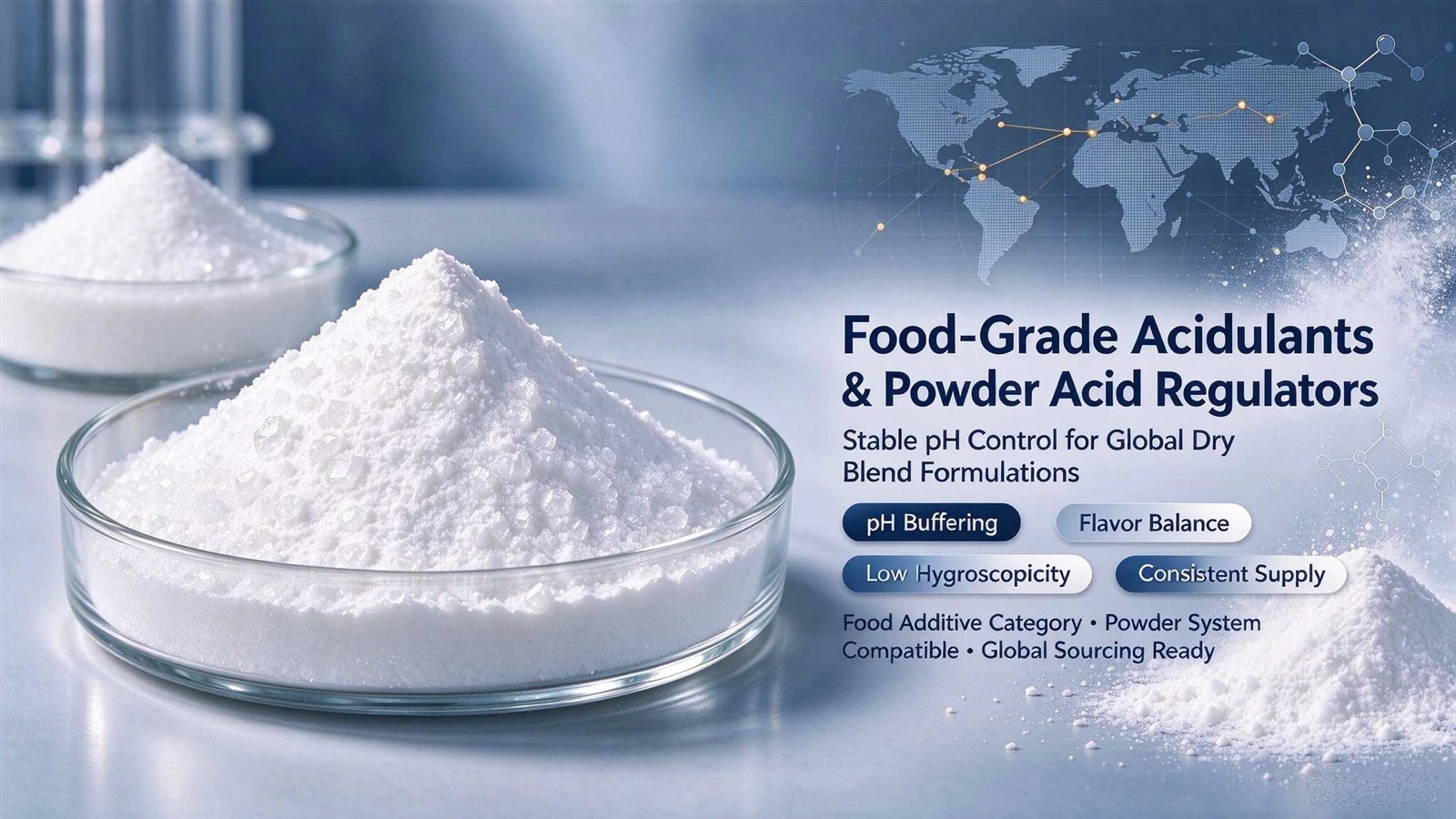
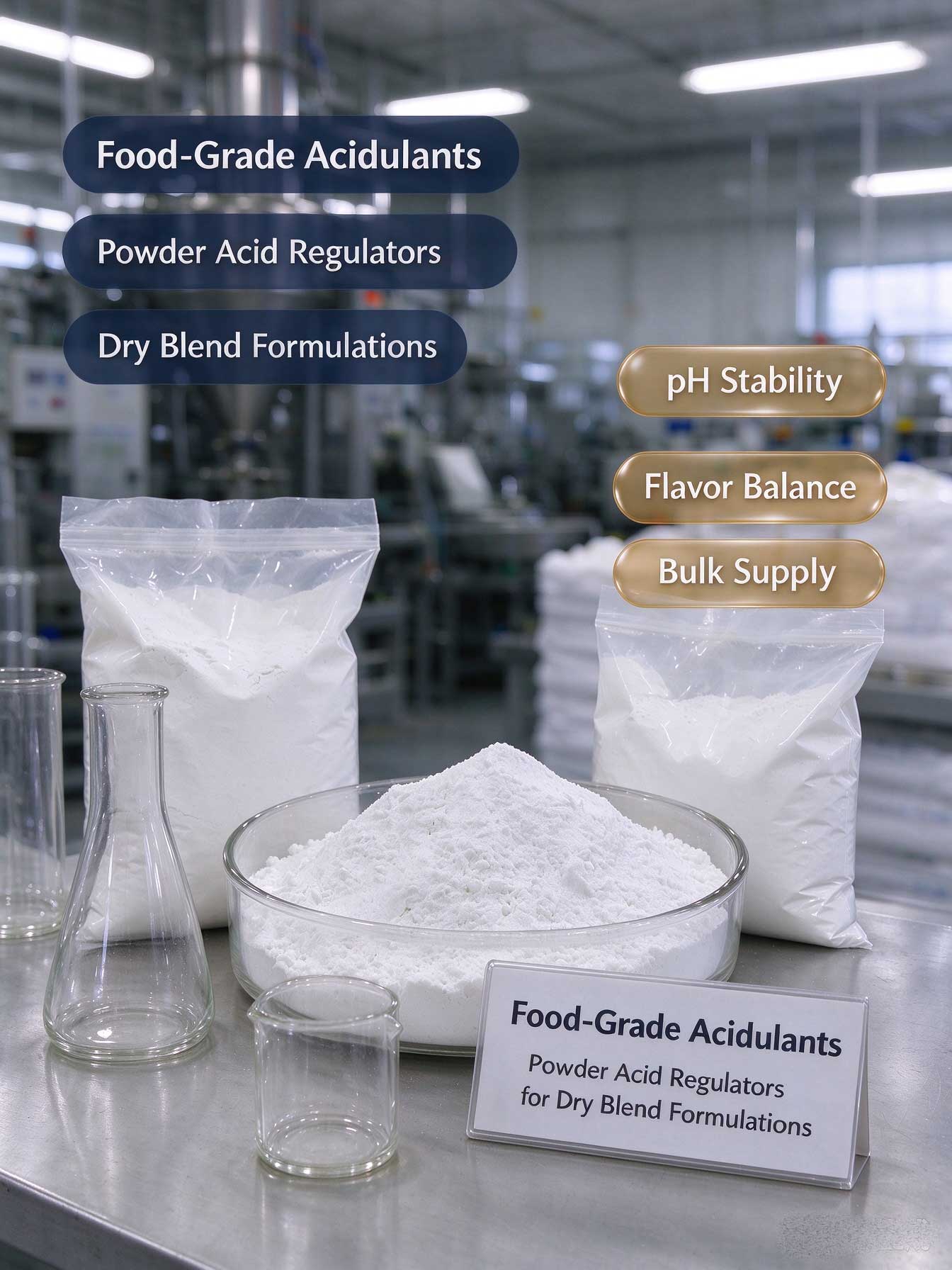
Food-grade acidulants stand as indispensable functional ingredients for all kinds of global dry blend formulations. They are far more than basic materials used only to create sour taste in finished products. These powder-type regulators work to stabilize the pH value of the whole formula system and harmonize complex flavour profiles of different raw materials. They can greatly improve the compatibility among various powder components inside premix and supplement blends. A carefully chosen acidulant helps maintain uniform sensory performance throughout the whole shelf life of powder goods. It serves dietary supplement lines, instant solid beverage projects and bakery premix production at the same time. Many formulators regard this category as the foundation for stable and repeatable powder development. It also brings great convenience for factories that carry out continuous dry blending and bulk manufacturing. Many brand owners also rely on these raw materials to keep their product taste consistent across different production batches. Selecting the right acidulant series can also cut down extra formulation adjustment work during new product trials. Even small changes in acid type will bring obvious differences to the final consumer experience. This is why professional formulators always reserve sufficient time for acidulant screening and testing.
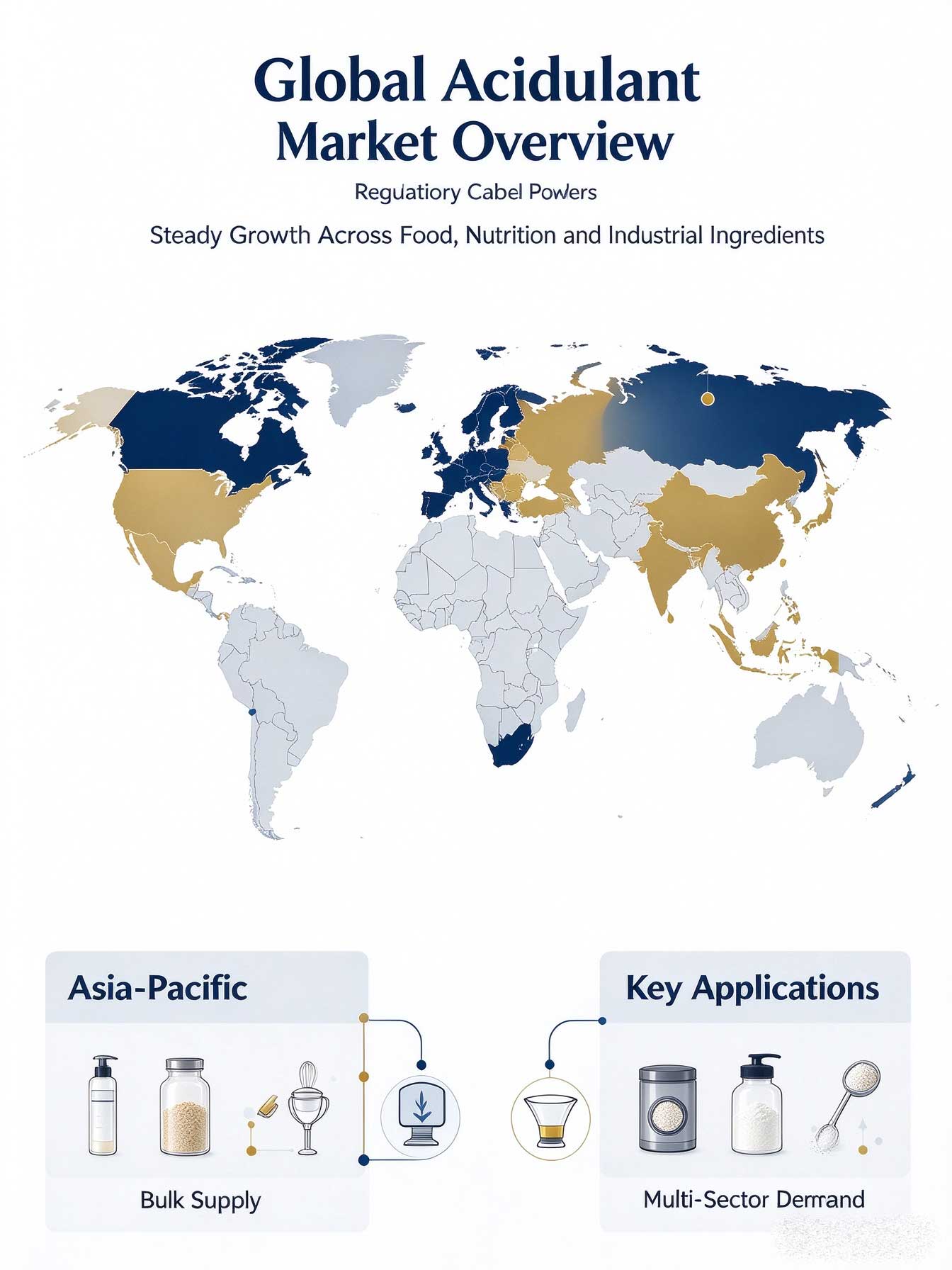
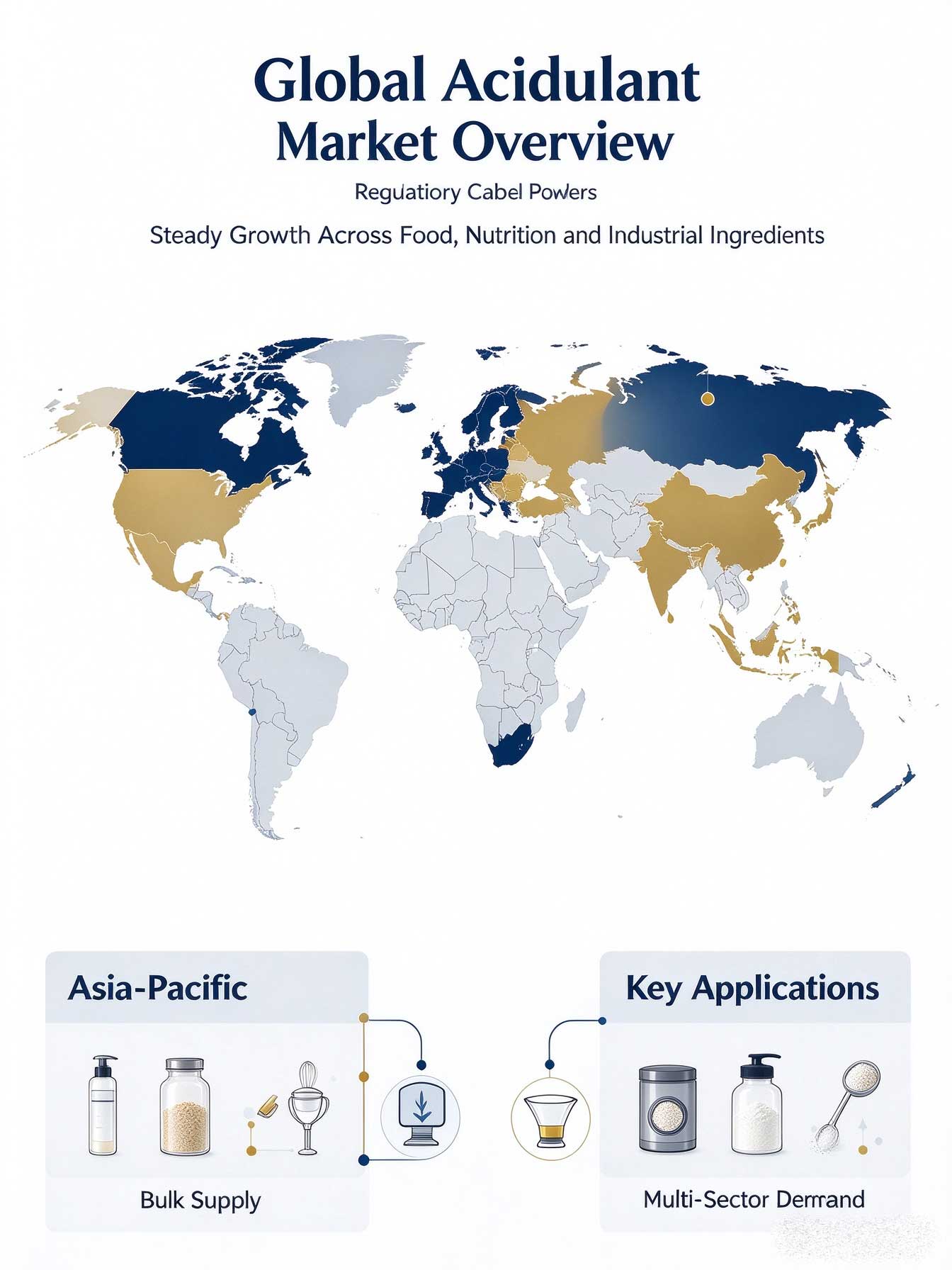
The global acidulant market maintains steady and sustainable growth year by year, powered by the booming clean-label trend across the food and nutrition industry. Europe, North America and Asia-Pacific form the three core markets with different focusing directions and evaluation standards. Buyers from Europe attach great importance to strict food additive regulations and full traceability of every batch of materials. North American customers prefer low-hygroscopicity powder acidulants that fit sports nutrition and instant drink formulas. Buyers in Asia-Pacific mostly focus on stable bulk supply, competitive cost and reliable delivery schedules. All international purchasers keep a close eye on consistent batch quality and complete supporting documents. Demand does not rely on a single downstream sector, which brings strong anti-risk capability for this ingredient category. More new brands keep joining this track and raise higher requirements for acidulant technical performance. Many regional distributors are actively expanding their acidulant portfolio to satisfy local factory demands. Cross-border buyers now tend to source multiple acidulant varieties from one single qualified supplier. They hope to simplify procurement procedures and unify quality standards for all related raw materials. Market demand also rises rapidly as more clean-label powder products launch in supermarkets and online nutrition stores.
Reasonable selection and matching of acidulants can build a reliable buffer system inside dry powder formulas. This well-designed buffer structure effectively prevents pH drifting and unexpected flavour changes during long-term sealed storage. It avoids harsh, sharp sourness and helps deliver a smooth, balanced taste experience for end consumers. Suitable acidulants provide gentle protection for many sensitive active raw materials in the powder system. These sensitive materials include vitamins, various amino acids, mineral compounds and plant extract powders. Bad pH conditions often lead to colour fading, off-flavour generation and activity loss of functional components. Experienced formulators will test acidulant combinations before formal mass production to verify stability. Matching acid types and dosage is the key to solving most common formulation failure problems of powder products. Different acidulants show different dissolving speed once end users pour the powder into water. Some acidulants are more suitable for fast-dissolving instant drinks, while others fit slow-release supplement premixes. The buffering curve also decides whether the finished product will taste sour unevenly after reconstitution. Formulators need to test the formula under different temperature and humidity storage conditions to confirm long-term stability.
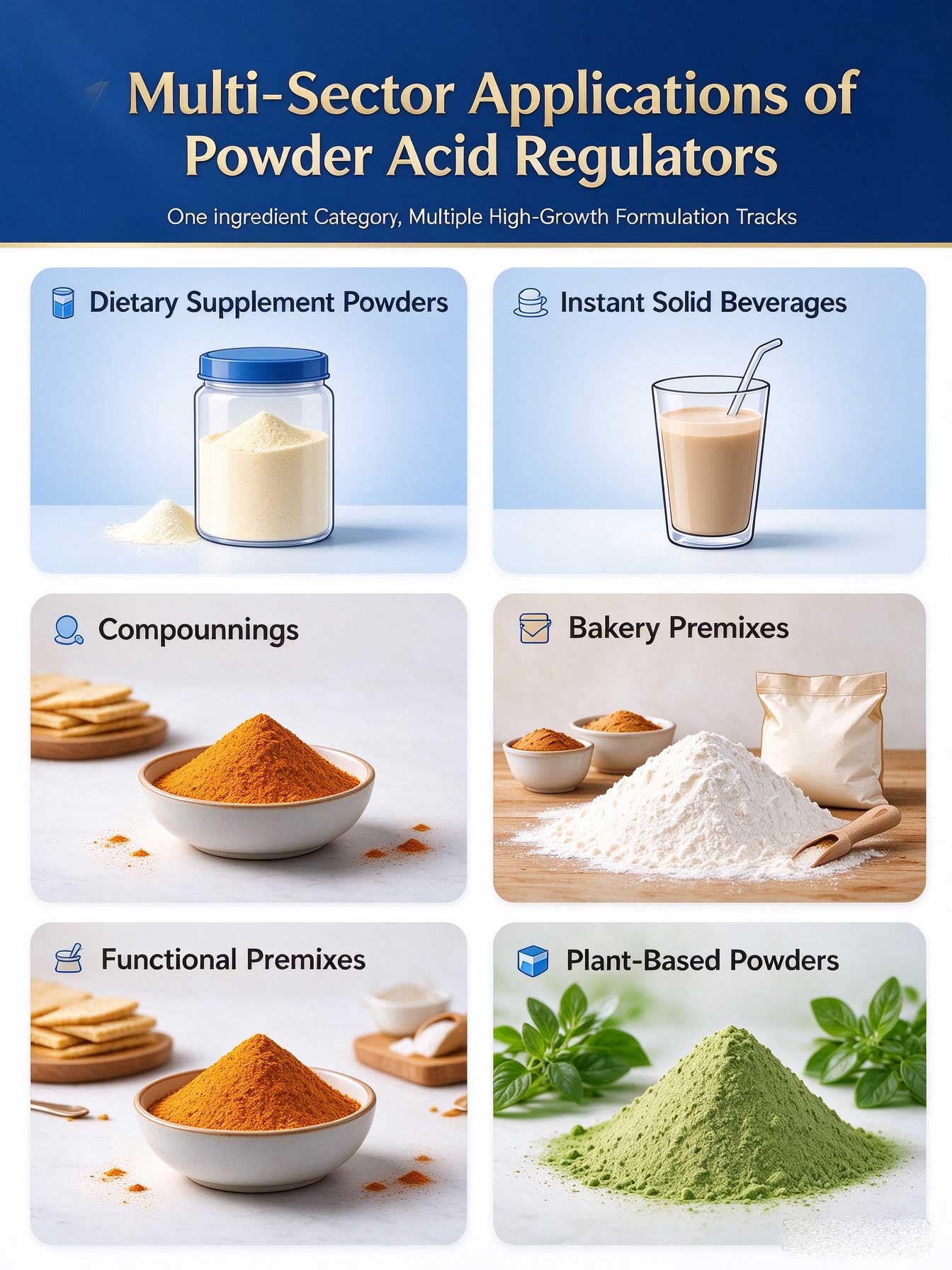
This versatile acidulant category covers multiple high-growth downstream tracks in the global food raw material market. It is widely adopted in standard dietary supplement powder formulas for taste adjustment and pH balancing. It works perfectly in fruit-flavoured instant solid beverages to realize stable acid perception after rehydration. Bakery premix factories use acidulants to control acidity and assist leavening systems for baked goods. Compound seasoning powder producers rely on these materials to enrich layered savoury flavour and reduce bland taste. Custom functional premix manufacturers often combine different acidulants to meet personalized technical demands. It also fits plant-based powder products well to mask unpleasant grassy or bean-like aftertastes. The wide application scene helps suppliers expand customer groups and disperse operational risks. It also allows buyers to unify their raw material procurement under one stable supplier portfolio. Many OEM factories will stock several types of acidulants to handle different client formulation requests. Some customers also ask for custom blended acidulant powder to skip complicated mixing steps in their own workshop. Custom premix acid blends can shorten the product development cycle greatly for brand customers.
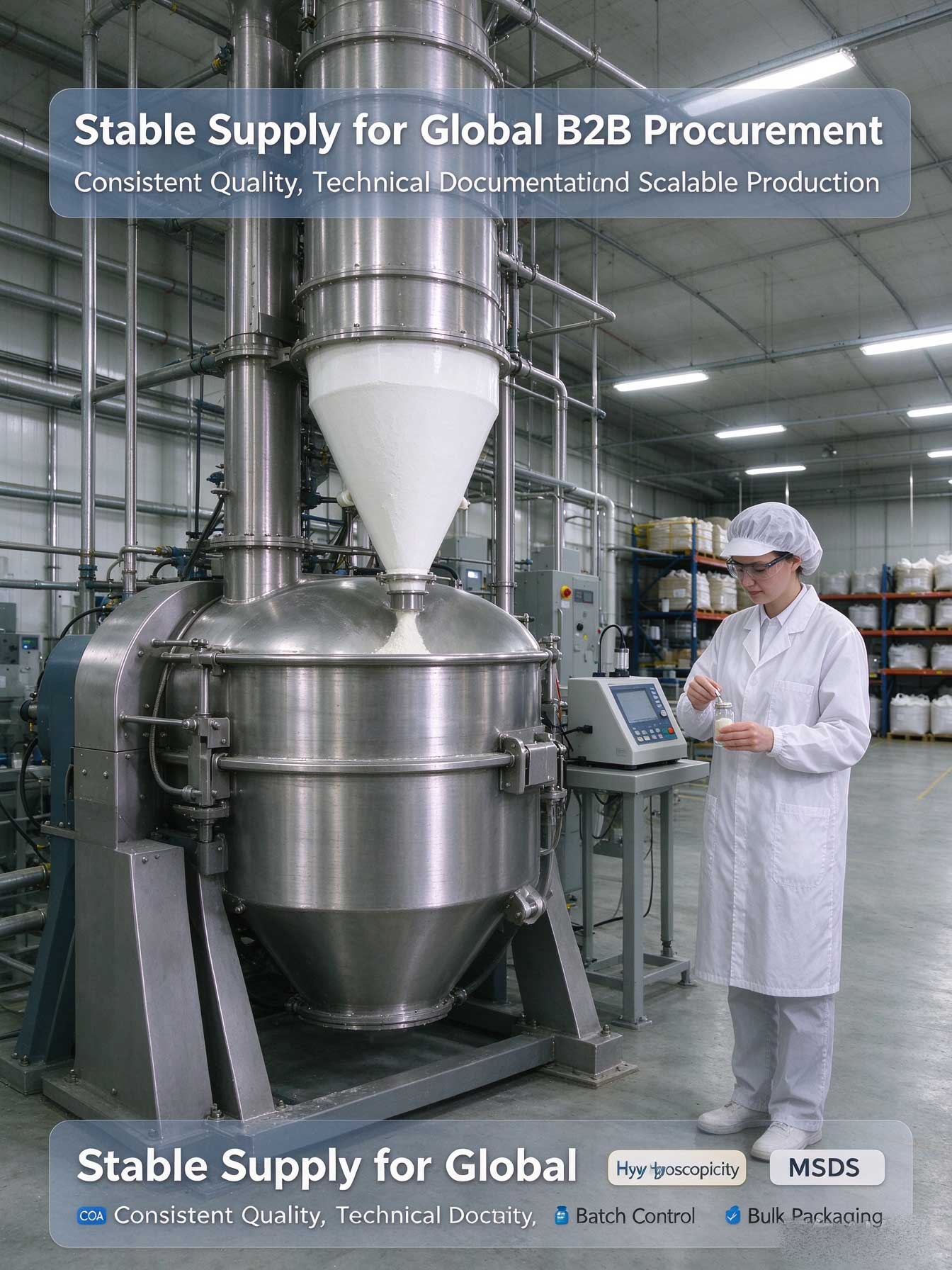
For B2B industrial purchasers, stable supply capacity and complete compliance documents are the top priorities for sourcing acidulants. Qualified and professional suppliers can provide full sets of files including COA, TDS and MSDS for customs and factory audit. High-quality powder acidulants feature low hygroscopicity, which is critical for dry blending processing and long-term storage. Reliable manufacturers own scalable production lines to support large bulk orders and urgent replenishment requests. Stable production capacity helps buyers avoid raw material shortages caused by seasonal fluctuation or market outages. Strict in-lab testing is carried out for every batch to control purity, moisture and heavy metal indicators. Good packaging and logistics schemes protect powder materials from moisture damage during long-distance sea shipping. Long-term cooperation with a trustworthy supplier can effectively control overall formulation cost and reduce procurement risks. Many large buyers will arrange factory audits before placing formal bulk orders to verify production standards. Consistent packing specification is also important for automated feeding lines in modern blending factories. Suppliers with flexible packing options can satisfy both small sample orders and full container bulk shipments. Professional technical after-sales support also helps buyers quickly solve formulation problems during production. We can also update compliance certificates timely to match the regulatory requirements of different target export regions. Our team keeps transparent communication on production schedules so buyers can better arrange their own production plans. Independent third-party testing is available upon request to meet the strict audit requirements of premium brand clients.
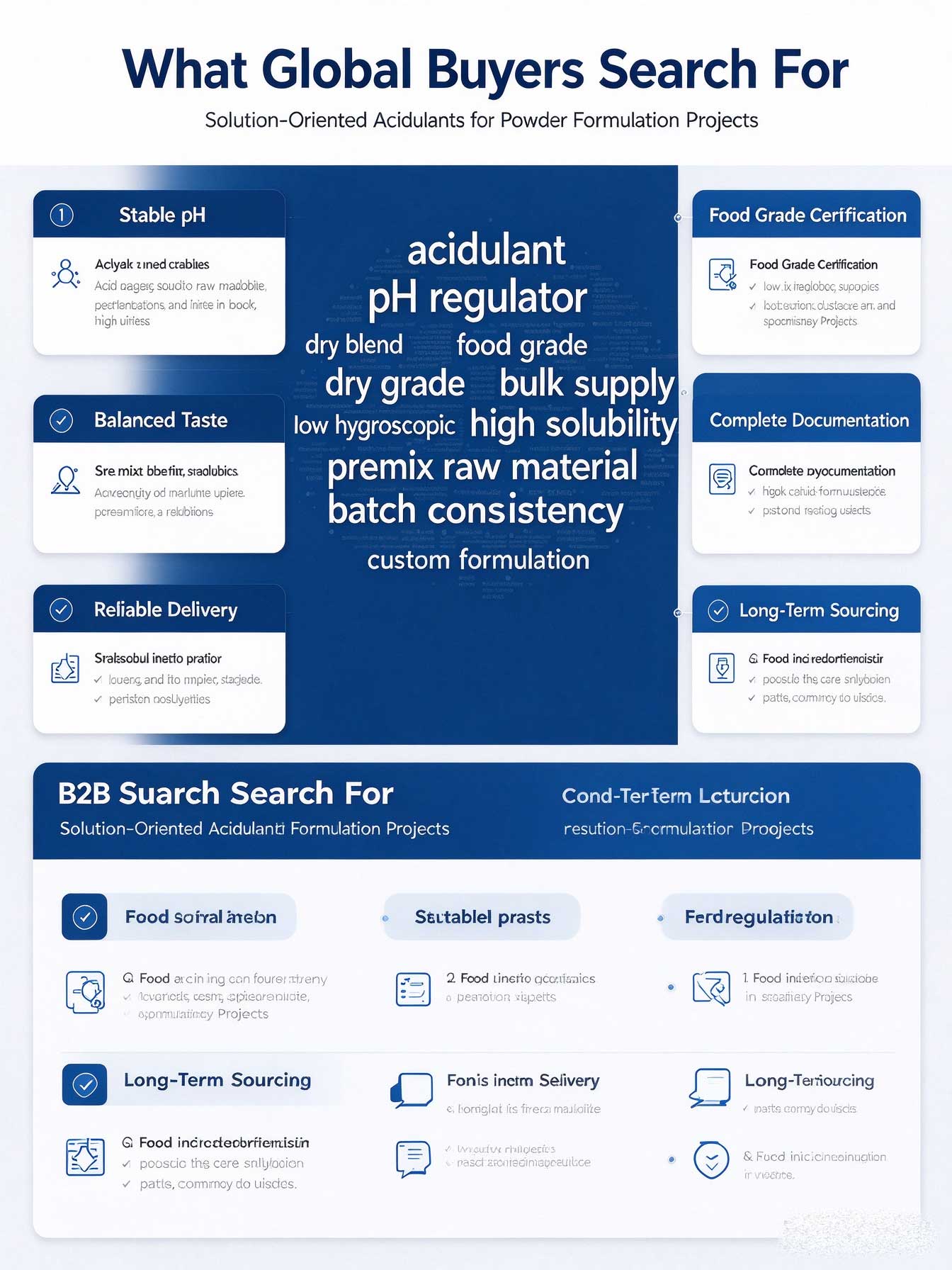
Global B2B buyers search for acidulants with practical formulation solutions instead of simple commodity goods. Their core demands are concentrated on low hygroscopicity, high water solubility and good dry-blend compatibility. Food-grade certification and consistent batch-to-batch quality are the basic thresholds for supplier selection. Many customers need flexible bulk packing and customized technical support for their unique powder projects. They often search keywords around pH regulator, food acidulant, dry blend additive and premix raw material. A lot of formulators also look for mixed acid blends to get better flavour and buffer performance. Buyers hope suppliers can respond quickly to technical questions and provide stable long-term supply. Understanding these real pain points helps suppliers deliver targeted products and win long-term cooperation orders. Most buyers will request free samples first for lab testing before negotiating bulk pricing and delivery terms. They will compare test data, document completeness and service speed among multiple suppliers at the same time. Buyers are also paying more attention to clean label status and non-GMO declaration for premium product lines. Fast quotation and clear lead time information greatly improve the chance of closing bulk purchasing orders.