When developing food formulations or cosmetic product lines, formulators often face critical decisions around antioxidant raw materials, and natural tocopherol and synthetic vitamin E stand out as two widely‑adopted vitamin E sources across global manufacturing chains. Many project planners overlook the deep‑seated structural distinctions between these two materials, which ripple through bioactivity, finished product stability, regulatory compliance and final market returns. Understanding how natural tocopherol and synthetic vitamin E compare empowers brands to match raw material choices to project positioning, whether working on premium nutritional supplements or mass‑volume daily cosmetic ranges.
1. Fundamental Definition & Structural Differences (Core Industry Background)
Natural tocopherol is derived from renewable plant sources, mainly vegetable oil deodorizer distillates and agricultural by‑products. It contains natural RRR‑alpha‑tocopherol together with a balanced mixture of beta, gamma, and delta tocopherols. Its stereoisomeric structure is fully compatible with human physiology and skin metabolism, featuring zero invalid isomers and high biological affinity.
Synthetic vitamin E is produced through full chemical synthesis from petrochemical feedstocks. The mainstream form is all‑rac‑alpha‑tocopherol (DL‑alpha‑tocopherol), consisting of eight stereoisomers. Only one isomer delivers effective biological activity, while the remaining isomers offer negligible benefits and are rapidly excreted by the human body and skin.
The structural gap between natural and synthetic vitamin E fundamentally determines differences in bioactivity, antioxidant efficiency, stability, and end‑product performance. It acts as the primary criterion for formulation selection in food and cosmetic projects.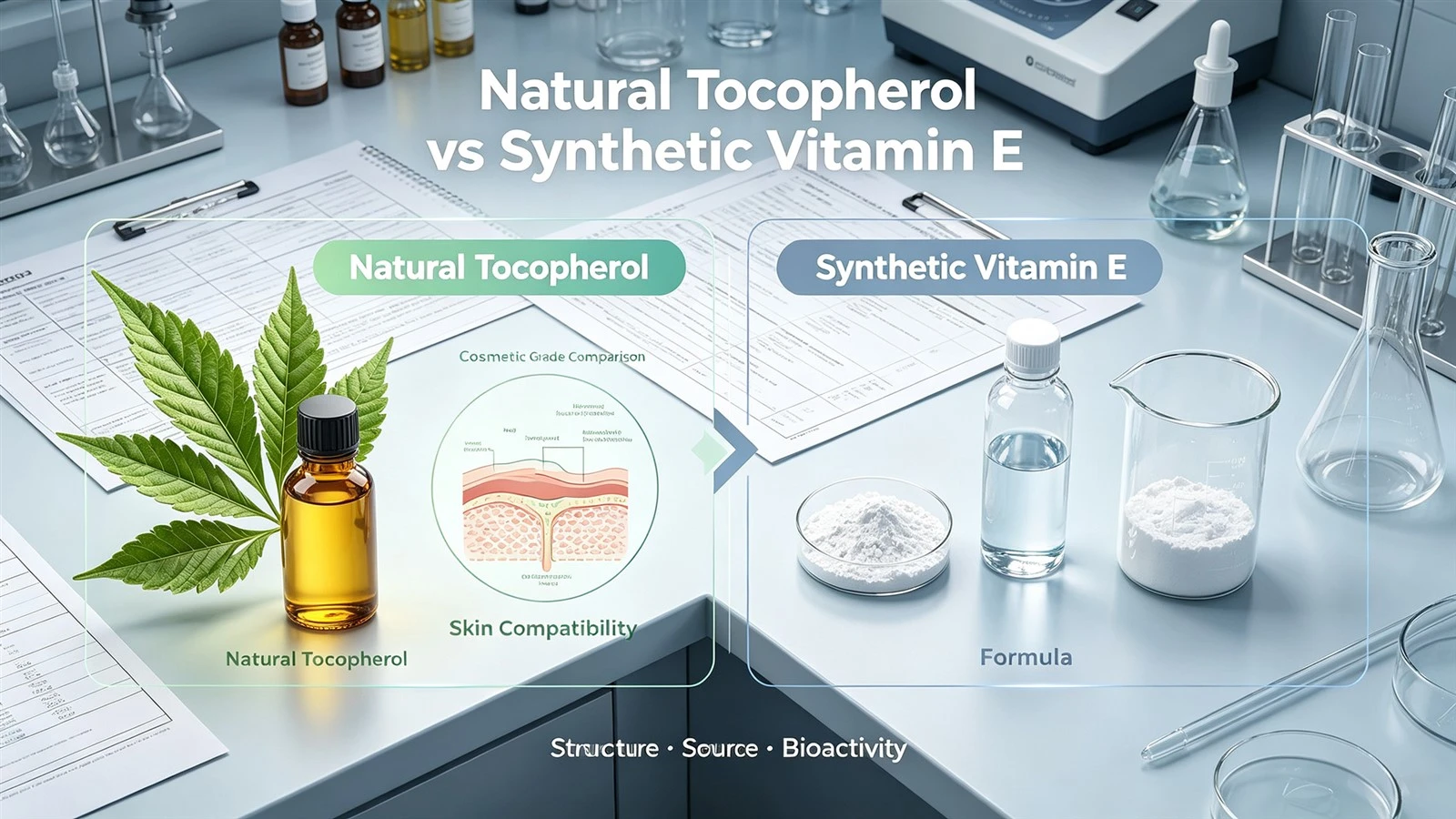
2. Performance & Functional Comparison: Food Grade vs Cosmetic Grade Application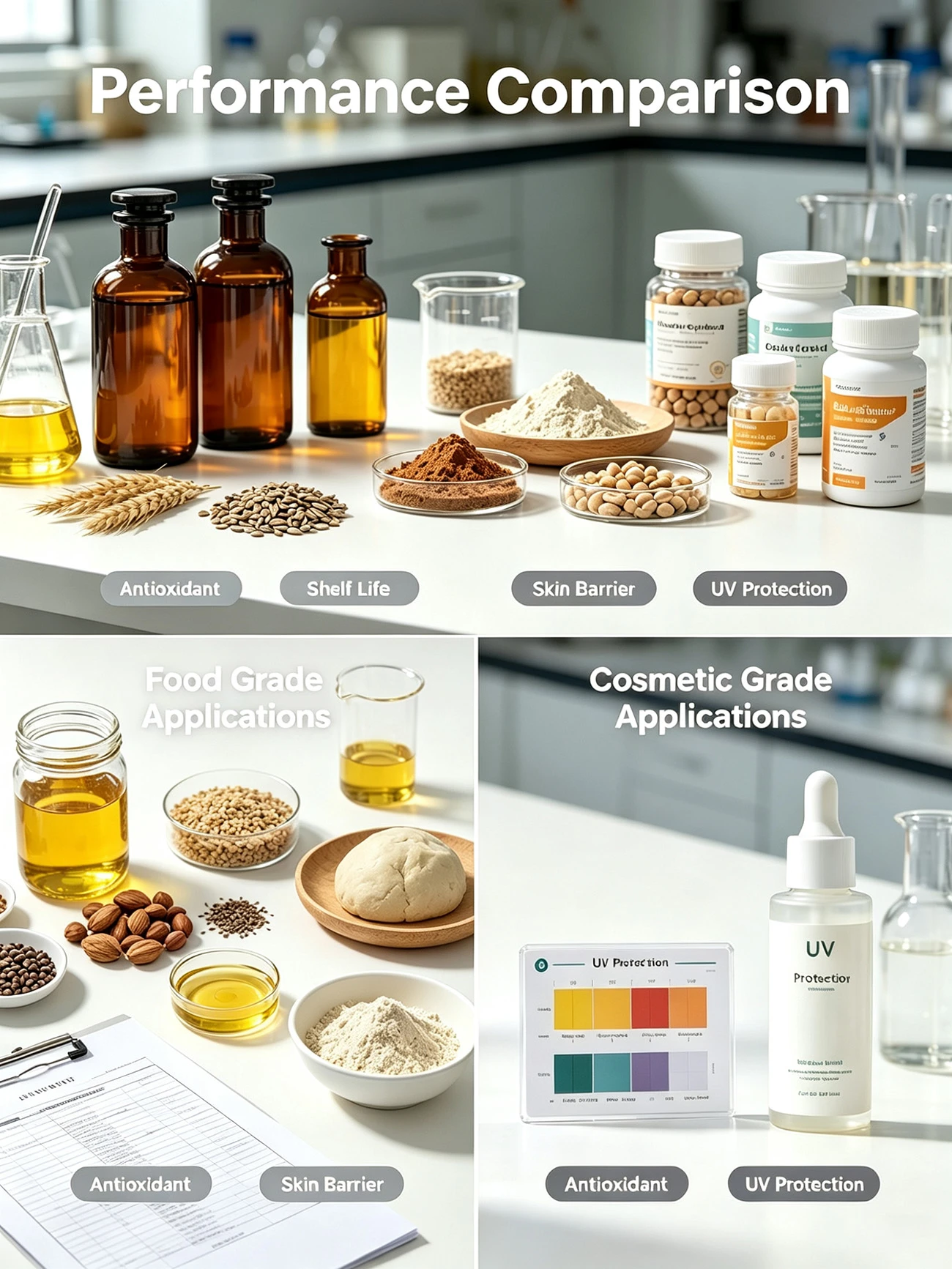
Bioavailability & Activity Level Natural tocopherol delivers approximately twice the bioavailability of synthetic vitamin E, with longer retention in human tissues and skin layers. Synthetic vitamin E presents low effective utilization rate and unstable functional performance in long‑term application scenarios.
Performance in Food Grade Projects Natural mixed tocopherols provide broad‑spectrum antioxidant effects, effectively inhibiting lipid oxidation, preventing rancidity, and extending shelf life. It is ideal for high‑end functional foods, maternal and infant nutrition products, health supplements, and premium edible oil systems. Synthetic vitamin E only meets basic antioxidant protection and routine nutritional fortification for mass‑market conventional food products.
Performance in Cosmetic Grade Projects Natural tocopherols can directly penetrate the skin barrier, neutralize free radicals, relieve UV‑induced damage, and support skin barrier repair and anti‑aging effects without enzymatic conversion. Synthetic vitamin E requires skin enzyme activation before taking effect, resulting in low conversion efficiency and limited skincare benefits. It is suitable only for basic moisturizing and entry‑level daily cosmetics.
Formula & Process Stability Natural tocopherol features excellent heat resistance and pH tolerance, adapting to high‑temperature food processing and complex cosmetic formula systems. Synthetic vitamin E is prone to activity attenuation under extreme processing conditions and complicated formula environments.
 3. Cost Structure, Compliance & Market Access Differences
Cost & Economic Efficiency Synthetic vitamin E benefits from large‑scale chemical mass production with low raw material costs and outstanding cost‑performance, making it suitable for low‑to‑medium‑end mass production projects. Natural tocopherol involves complex extraction and purification processes with limited raw material sources, leading to higher unit costs and overall formula expenses.
Global Regulatory Compliance Both materials comply with mainstream standards including FDA, EU EFSA, and China GB standards, but follow different labeling specifications. Natural vitamin E is labeled as d‑alpha‑tocopherol, while synthetic vitamin E is marked as dl‑alpha‑tocopherol. Strict labeling and advertising requirements apply for high‑end food and beauty brands globally.
Certification & Market Qualification Natural tocopherol qualifies for organic food certification, clean beauty, and natural cosmetic certification systems, supporting high‑end market positioning. Synthetic vitamin E cannot be used for organic or natural ingredient claims and is restricted to conventional compliant product lines.
Terminal Product Premium Products formulated with natural tocopherol gain obvious market premium power, higher consumer recognition, and better brand image. Synthetic vitamin E only supports basic market pricing with low profit margins.
4. Industrial Development Trends & Market Replacement Logic
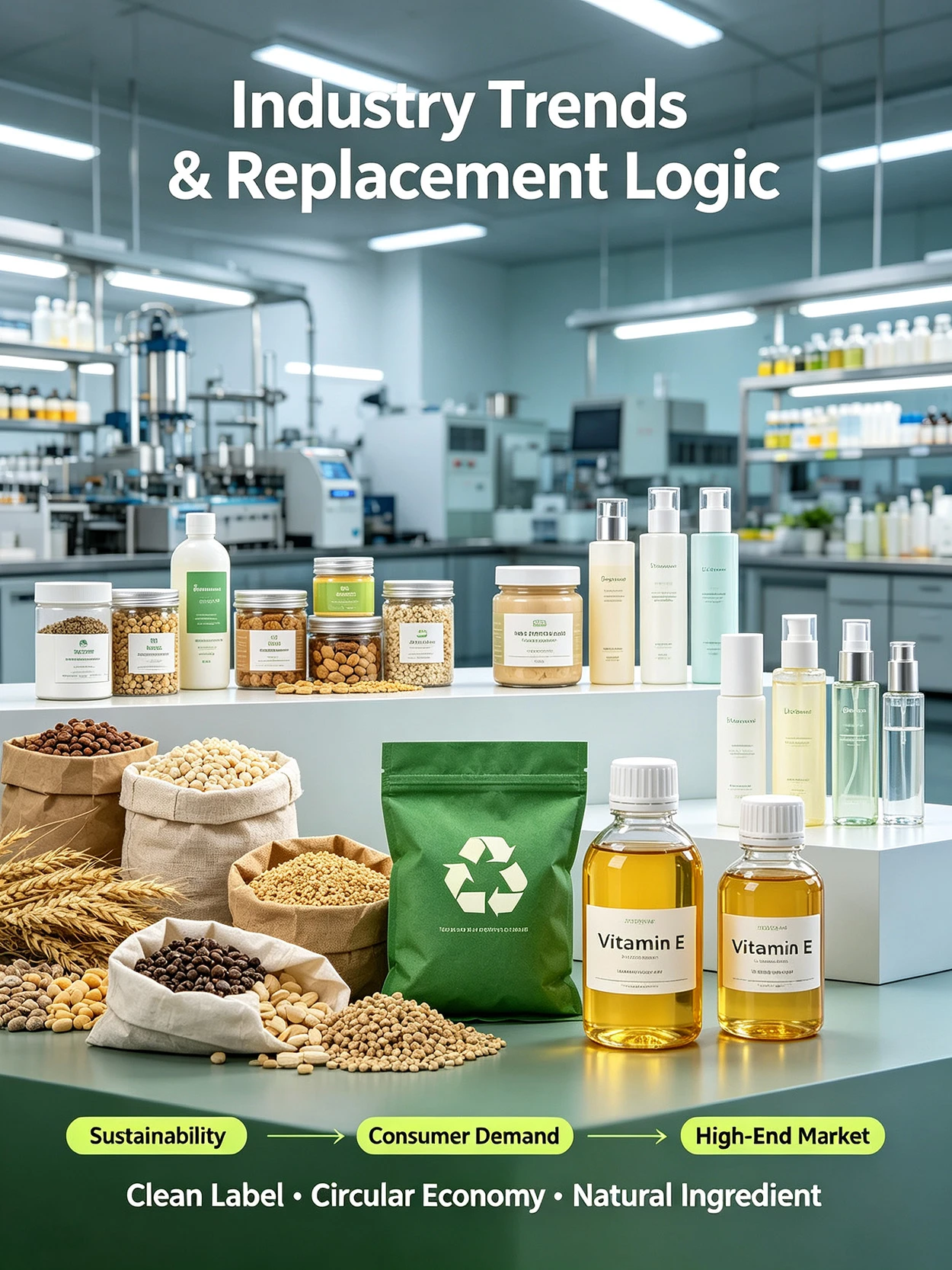
Sustainability & Carbon Neutrality Trend Natural tocopherol is a green and circular raw material recycled from agricultural by‑products, featuring low carbon emissions, renewable sources, and no petrochemical pollution risks. It perfectly matches global circular economy and sustainable development policies. Synthetic vitamin E relies on non‑renewable petrochemical raw materials with high carbon footprints and environmental pressure.
Upgraded Consumer Demand Global consumers are increasingly pursuing clean labels, natural ingredients, and zero‑additive formulas in food and personal care products. The booming clean beauty and functional health food trends continuously drive the replacement from synthetic vitamin E to natural tocopherol.
Market Segmentation Pattern Synthetic vitamin E still dominates low‑end conventional food and mass‑market daily cosmetics. Natural tocopherol is rapidly penetrating high‑end functional food, nutritional supplements, and efficacy‑driven skincare markets, forming a clear differentiated competition pattern.
Technological Iteration Direction Continuous upgrading of natural tocopherol extraction and purification technology expands production capacity and reduces production costs. It gradually narrows the cost gap with synthetic products and becomes the long‑term mainstream direction of the vitamin E raw material industry.
 5. Project Selection Guide: Accurate Selection for Cosmetic & Food Projects
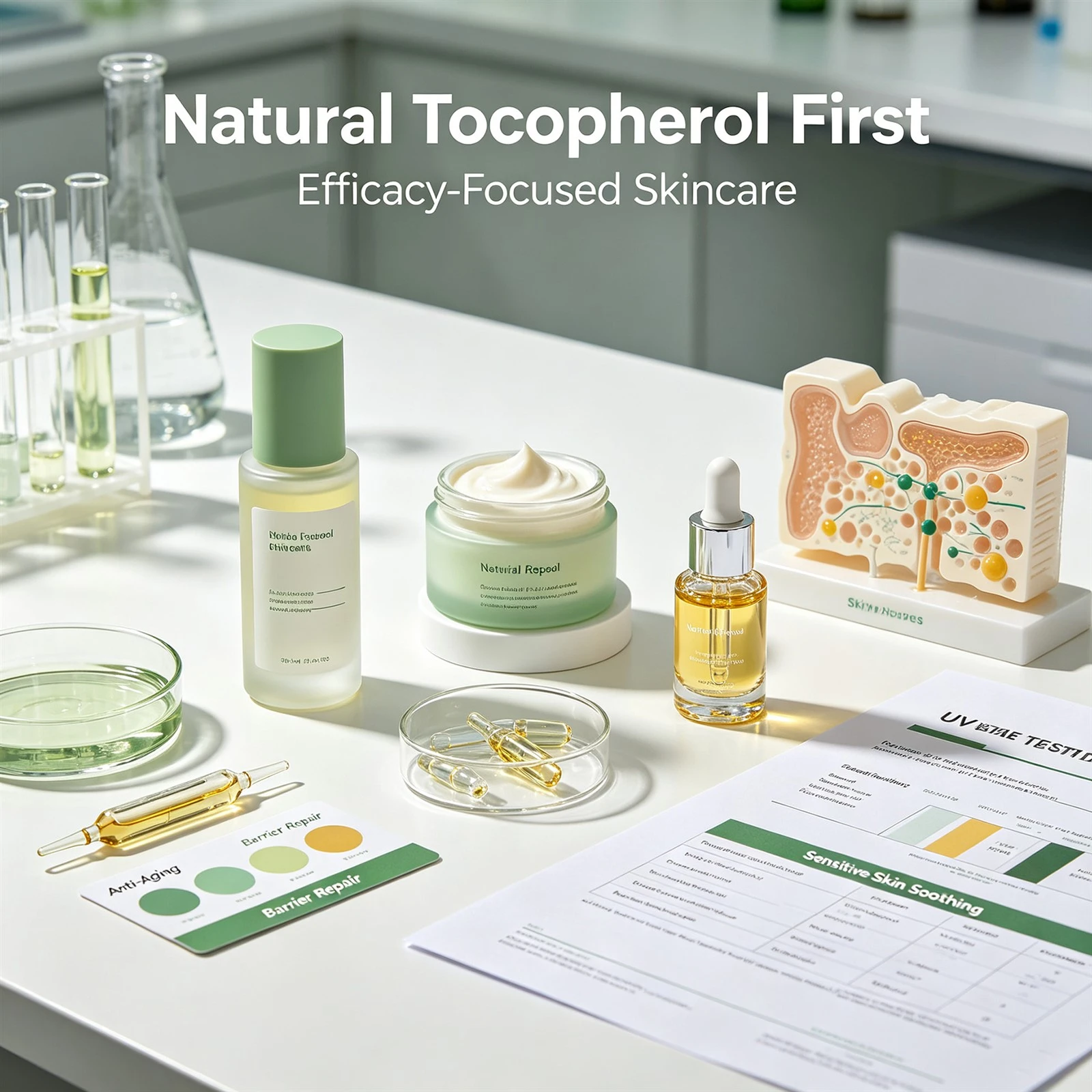
Scenarios for Priority Use of Natural Tocopherol High‑end health supplements, maternal and infant foods, organic grain and oil products, premium baked goods. Efficacy‑focused skincare products including anti‑aging, barrier repair, sensitive skin soothing, and high‑end professional beauty lines, as well as all projects positioning natural, organic, and high‑value functional claims.
Scenarios for Priority Use of Synthetic Vitamin E Mass‑market snack foods, conventional grain and oil fortification, ordinary processed food. Entry‑level daily care products, basic moisturizing cosmetics, and cost‑sensitive large‑volume mass production projects without high‑end functional claims.
Balanced Compound Solution For mid‑end upgrading projects, the compound formula of natural and synthetic vitamin E can balance functional performance, production cost, and product selling points. It helps brands achieve differentiated competition in the mid‑tier market.
Industry Avoidance Tips Avoid vague "Vitamin E" labeling confusion. Select raw materials strictly according to project positioning to prevent non‑compliant labeling, unqualified functional effects, and misleading market promotion risks.