https://www.hibobio.com/food-additives/sodium-tripolyphosphate-powder.html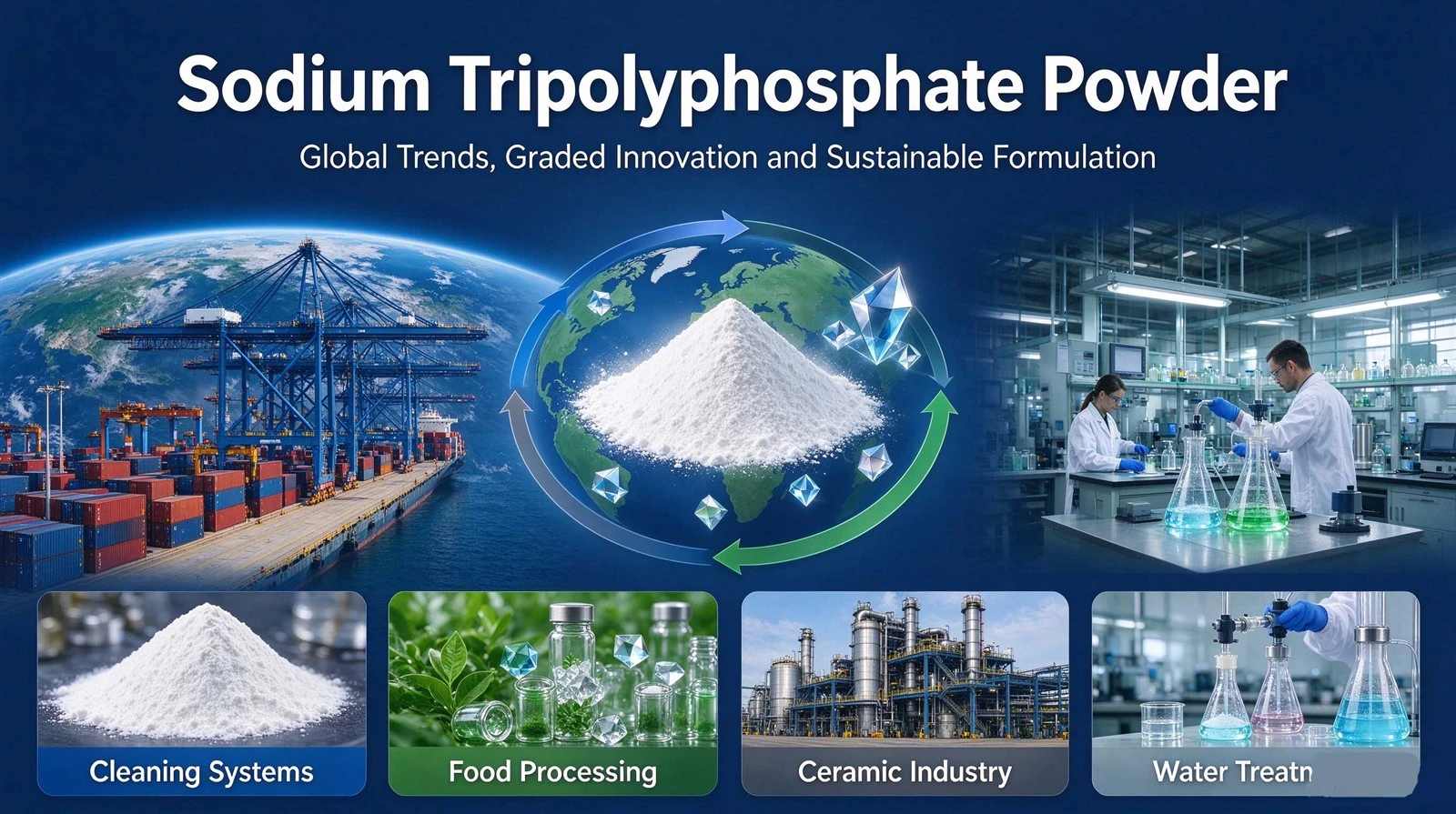
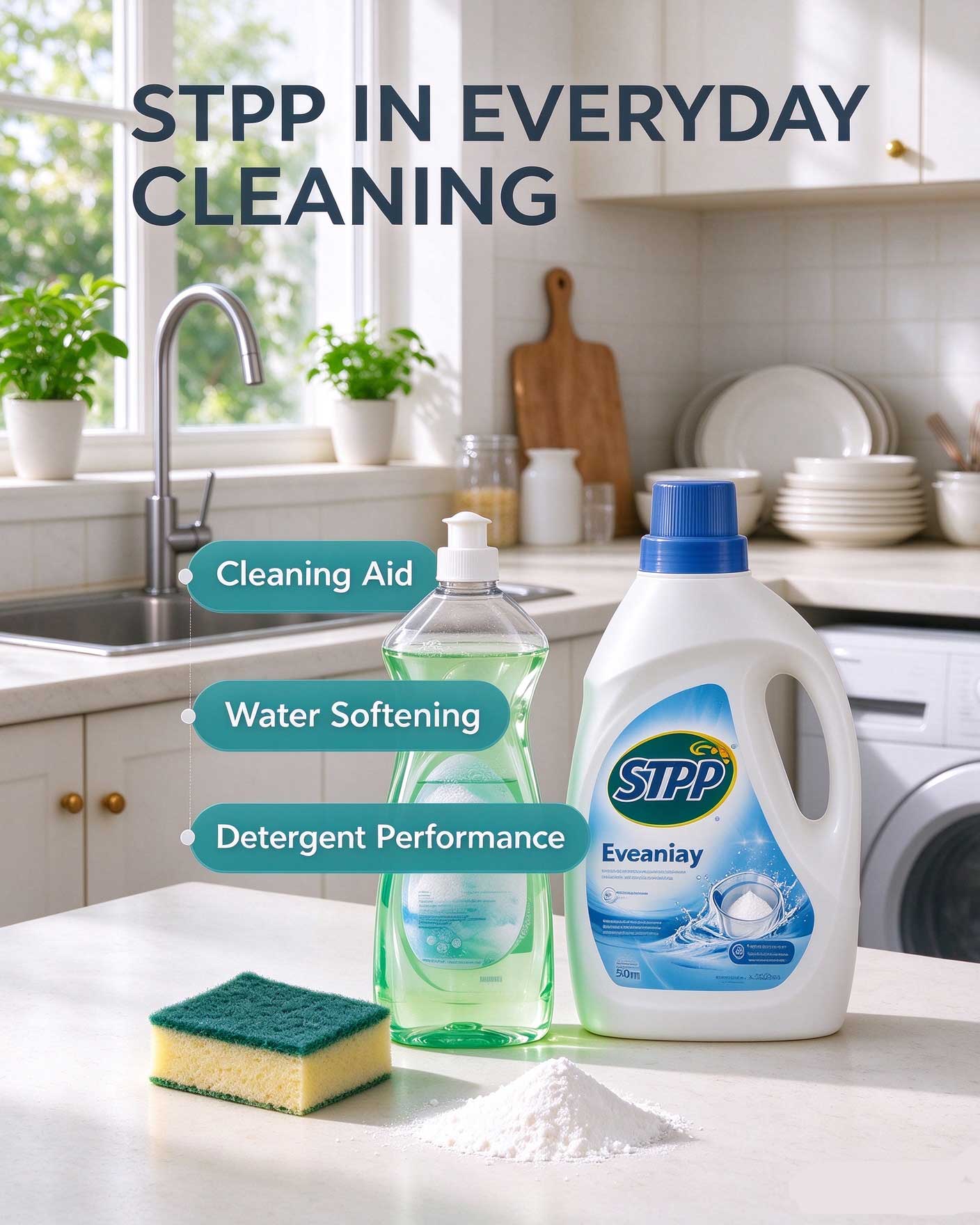
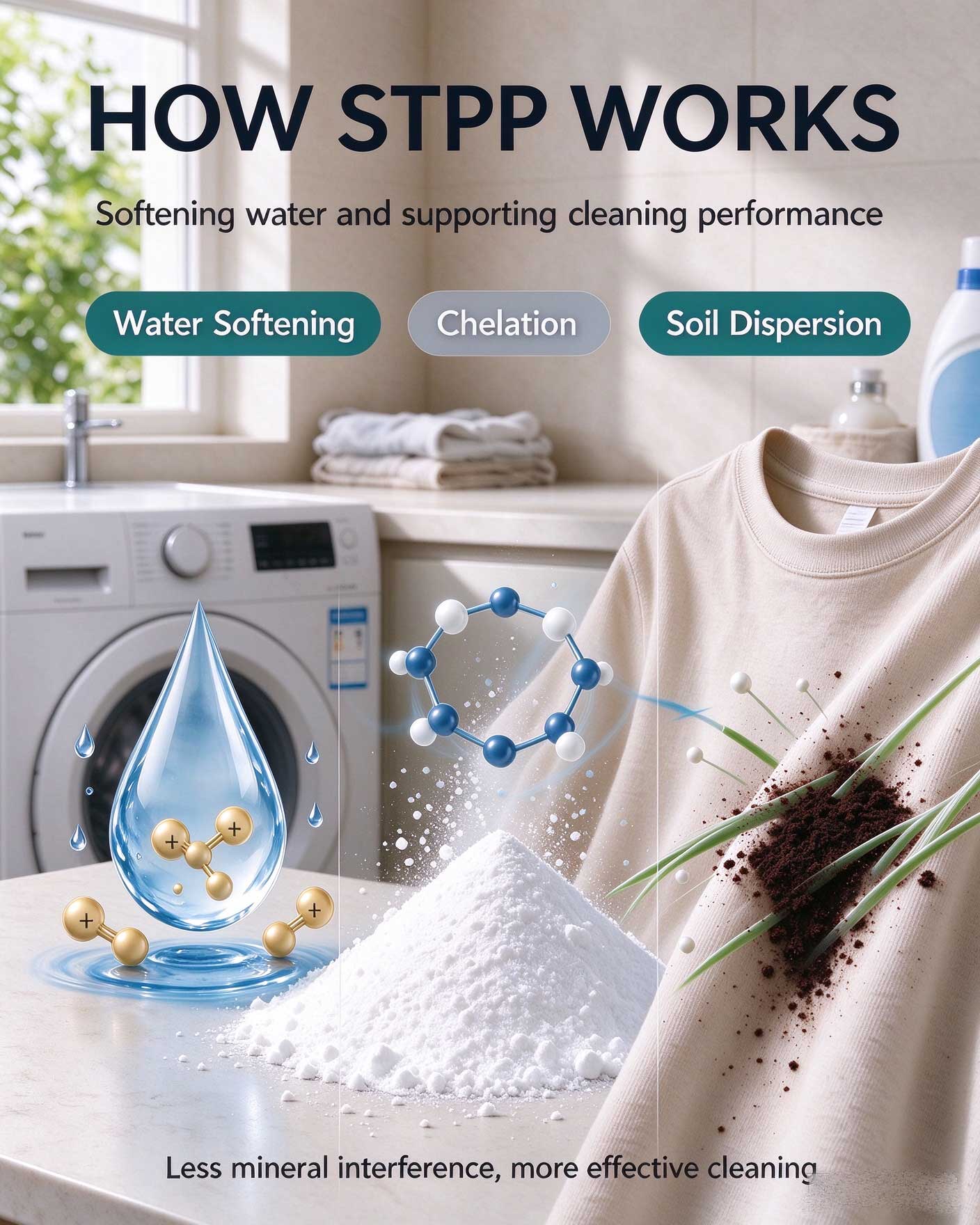
Sodium tripolyphosphate (STPP) is a widely used inorganic polyphosphate with outstanding chelating, dispersion and water softening properties. It acts as a powerful builder to bind metal ions in water, preventing mineral deposits and improving cleaning efficiency in daily detergents. Many household cleaning formulas rely on STPP to lift stubborn dirt and grease without damaging fabric and surface materials. Its stable powder form makes it easy to mix and incorporate into different dry and liquid formulations for consumer home care products. When added to laundry powder, dishwashing cleaners and all-purpose surface sprays, STPP neutralizes hard water minerals that make soap ineffective. It keeps dirt particles suspended in washing water so grime will not reattach back onto clothes, tiles or kitchen countertops after rinsing. Home care formulators appreciate its consistent performance and simple handling during mass production of consumer cleaning goods. It balances cleaning power and formulation cost, making it one of the most cost-effective functional additives for household product lines around the world.
STPP achieves its powerful effects mainly through ion chelation and particle dispersion mechanisms. It captures calcium and magnesium ions in hard water to eliminate the negative impact of water hardness on cleaning performance. The molecules can wrap fine dirt particles to stop redeposition onto cleaned surfaces after washing. This unique physical and chemical property makes it stand out from ordinary auxiliary agents in many formulation systems. The polyphosphate molecular structure can form stable complexes with metal cations present in tap water, disabling the tendency for limescale to build up on equipment and surfaces. It also adjusts the pH environment moderately to support surfactants to fully exert their oil and stain removal capacity. Unlike some single-function additives, STPP combines multiple functions within one raw material, simplifying the overall formula design for product developers. Formulation technicians can reduce the number of other auxiliary ingredients when STPP is properly dosed into the cleaning system.
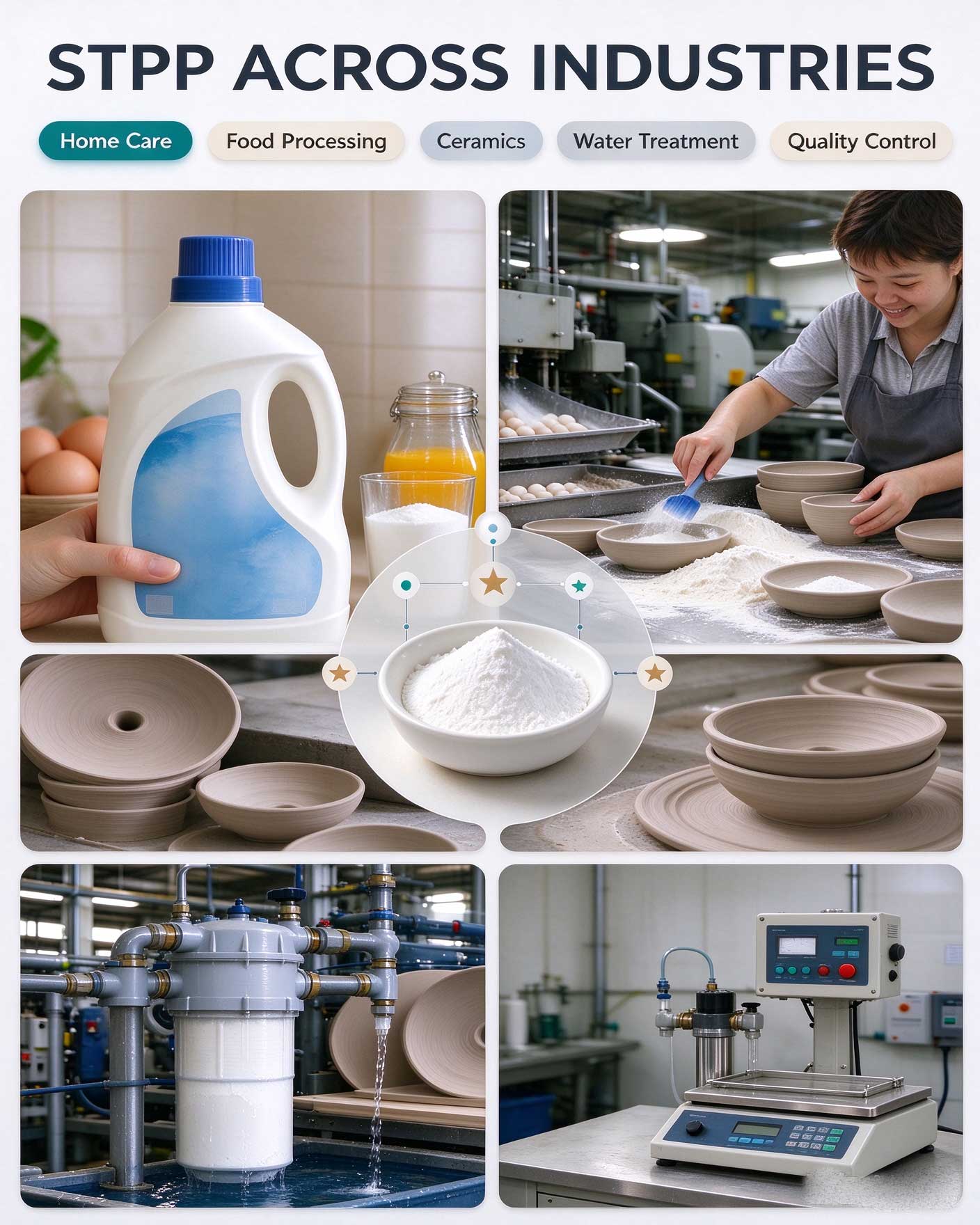
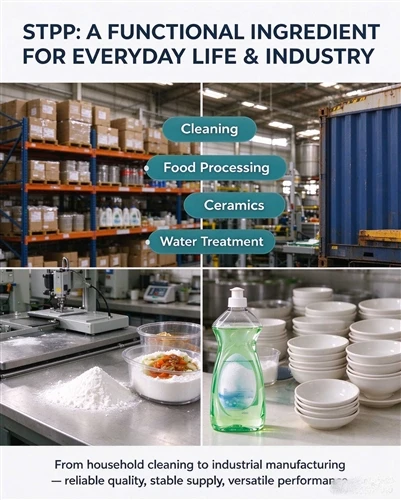
Sodium tripolyphosphate serves as a multi-purpose functional raw material covering multiple major industrial sectors. In ceramic production, it works as a dispersant to reduce slurry viscosity and optimize the forming process of ceramic blanks. It also plays an important role in water treatment processes to regulate water quality and assist solid particle precipitation. Food-grade STPP is commonly used as a water retention agent and quality improver for meat and seafood processing. Detergent industry remains the largest consumption field for this multi-functional inorganic additive around the world. In ceramic workshops, low-viscosity slurry brought by STPP allows uniform casting and reduces cracking risks during drying and firing stages. For wastewater treatment projects, it helps flocculate suspended solids for easier filtration and separation. Each application scenario requires a corresponding grade of STPP with customized particle size and purity indicators. Manufacturers can select proper STPP variants according to production goals and local regulatory requirements of their end markets.
Industrial laundry and large-scale detergent production consume large volumes of STPP every year for commercial cleaning scenarios. Commercial laundries, hotel linen washing factories and textile cleaning plants benefit greatly from its hard water resistance and soil suspension capacity. It helps reduce detergent dosage and shorten washing cycles while maintaining consistent cleaning results for heavy soiled textiles. Manufacturers can blend STPP with other surfactant ingredients to develop cost-effective industrial detergent formulas for bulk orders. Hotel linen always accumulates body oil, food stains and dust after heavy daily use, and STPP can greatly boost the washing effect for these heavy loads. Textile factories also use STPP in fabric pretreatment steps to remove sizing agents and mineral impurities before dyeing. Stable performance in continuous large-batch washing helps industrial washing plants cut operating costs and improve linen service life. Suppliers often provide technical guidance on recommended addition ratios for different industrial washing equipment and water quality conditions.

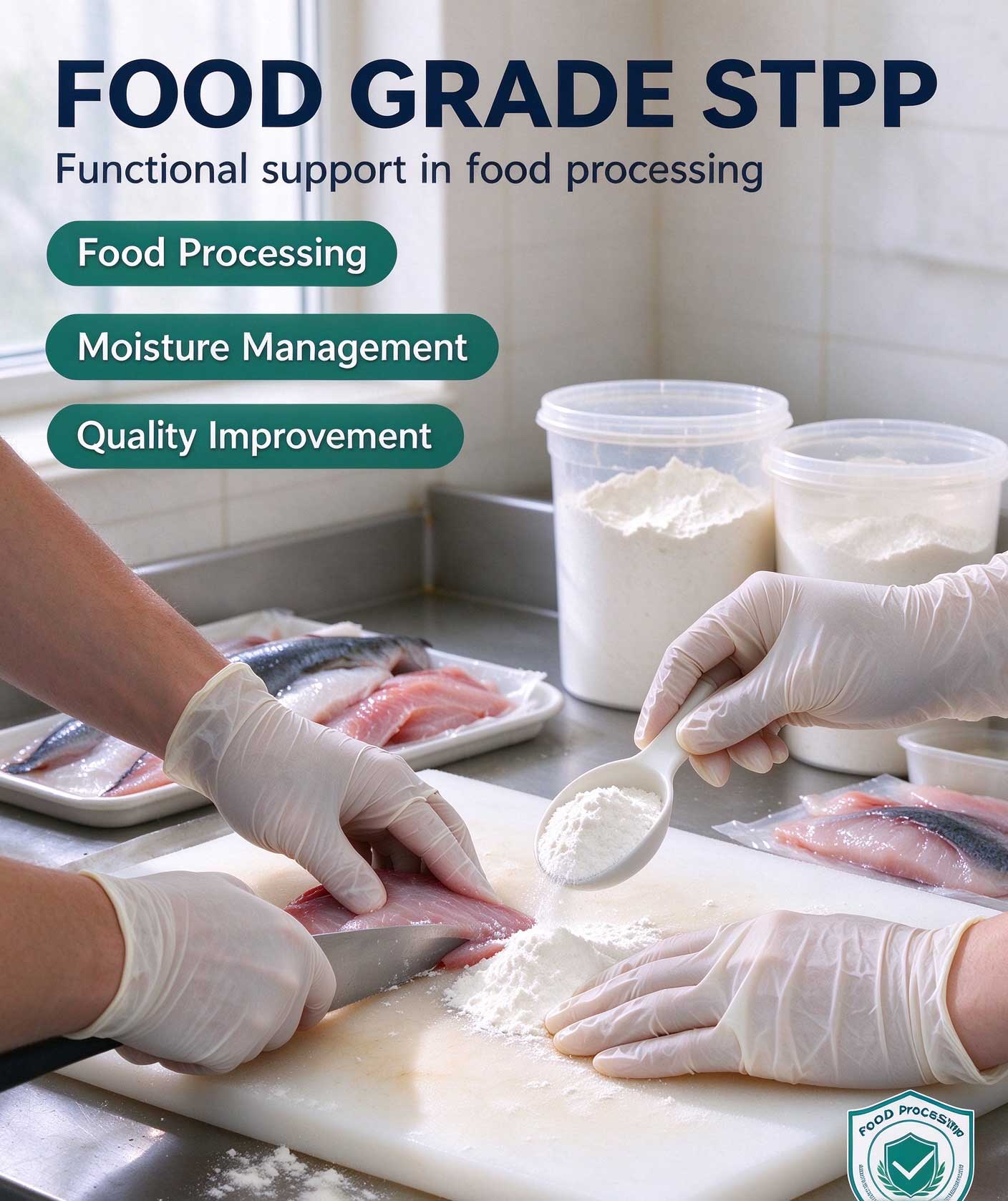
Food-grade sodium tripolyphosphate complies with international food additive standards for food processing applications. It helps retain moisture in meat, seafood and processed products to lock juiciness and improve texture during freezing and heating processes. Strict purification procedures are applied to remove heavy metal impurities and ensure safety for food contact use. Food processors can accurately control the addition amount according to different product requirements and regional regulatory limits. During cold storage and transportation, food-grade STPP slows down moisture loss, preventing meat and seafood from becoming dry and tough. It also improves the binding property of minced meat products, maintaining good shape after cooking and reducing product breakage. Every batch of food-grade STPP undergoes heavy metal and microbial testing to meet FDA, EU and other global food safety regulations. Food factories need to follow local maximum usage limits when adding STPP into aquatic products, ham, sausages and other processed foods.
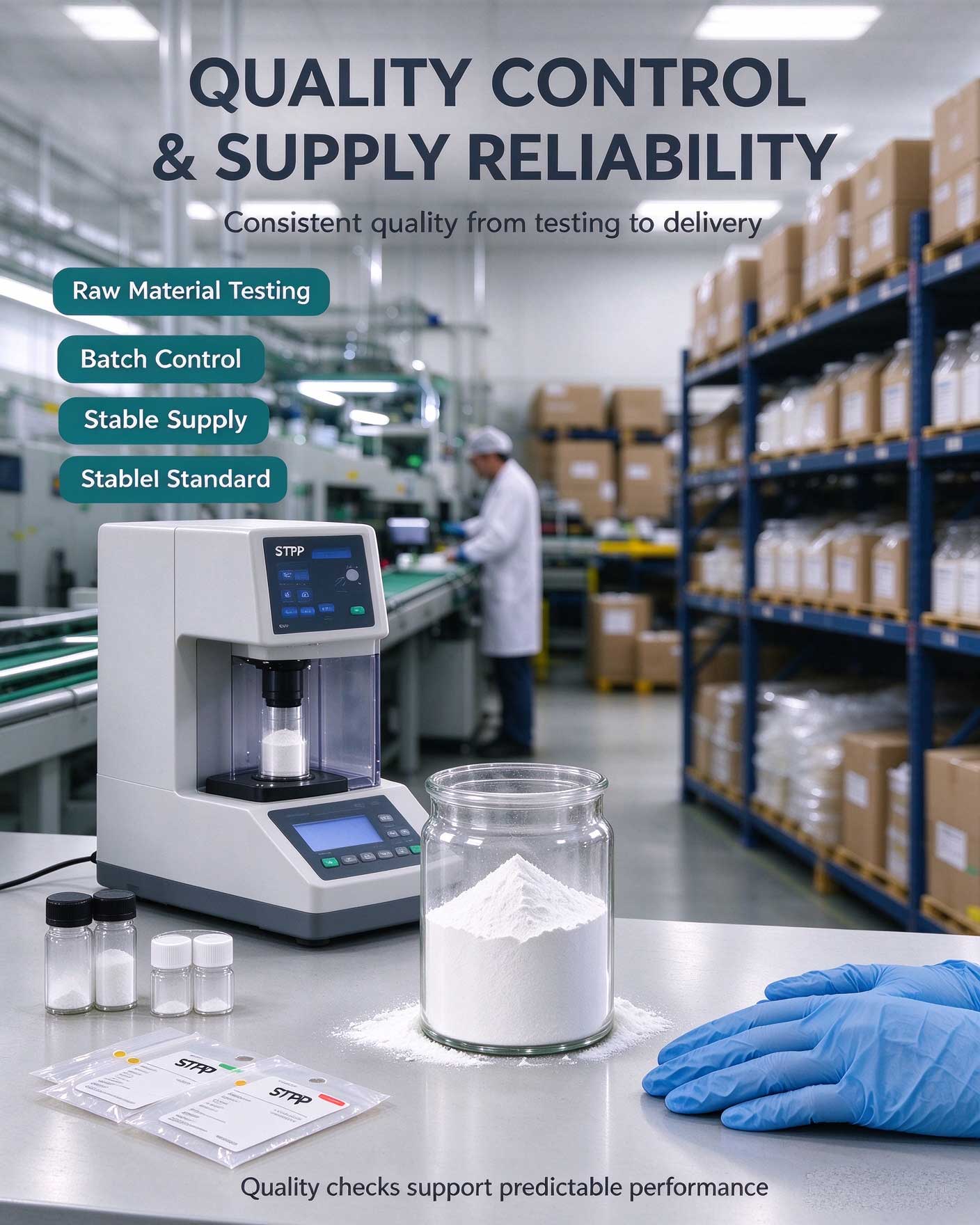
Strict quality control runs through the whole production process of STPP to guarantee stable product quality for global buyers. Raw material screening, reaction parameter monitoring and finished product testing are implemented at every production stage before shipment. Complete COA documents can be provided for each batch to support customs clearance and customer factory inspection. We maintain sufficient inventory and flexible logistics solutions to deliver consistent bulk supply to customers worldwide. All raw phosphate materials are inspected on arrival to avoid unqualified feedstock entering production lines. Finished powder will be tested for purity, particle size, pH, moisture and heavy metal content before packaging. Third-party inspection can be arranged upon customer request for large bulk orders to verify product specifications. Our team tracks every shipment status and supports customers to solve documentation and logistics issues during import.
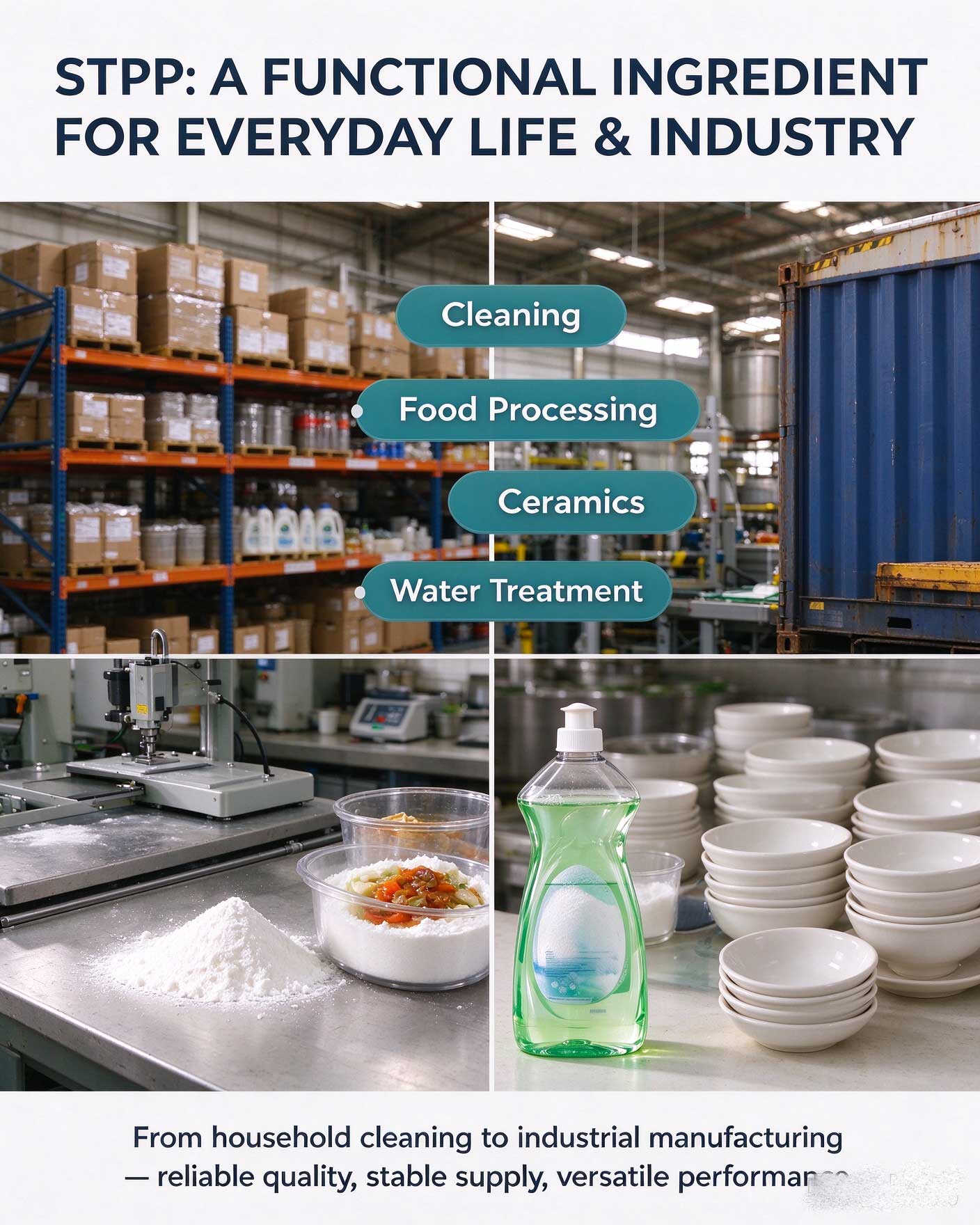
STPP is more than a bulk inorganic chemical-it is a functional ingredient that supports cleaning performance, food quality, ceramic processing, water treatment and industrial production across many everyday applications. For global buyers, choosing a consistent STPP supplier means more than securing raw material supply; it means supporting stable formulations, fewer production interruptions and more reliable end-product results. As industries continue to optimize costs, efficiency and compliance, STPP remains a practical solution for both consumer-facing products and large-scale manufacturing operations. Working with an experienced supplier can help businesses select the right grade, manage quality requirements and align product specifications with regional regulatory expectations. Whether the requirement is for technical-grade detergent additives, food-grade processing aids or industrial-grade functional powders, STPP continues to play an important role behind many familiar products and manufacturing processes.