Introduction
Many cosmetic formulators and R&D teams have run into a troublesome, counterintuitive issue: they source skipjack elastin peptide with a fully compliant COA, all listed parameters meet purchase specifications, and the material performs well in simple aqueous pre-tests. Yet once integrated into complete emulsified systems, serums or hydrogel matrices, undesirable defects emerge during ageing storage or thermal cycling. Flocculation, subtle haze, visible phase separation, sediment formation, or progressive fishy off-odor development can compromise an entire production batch. It is easy to attribute these failures to human error, contamination, or inconsistent raw material quality, but a large share of these stability incidents stems from the inherent molecular architecture of skipjack elastin peptide itself.
The Molecular Root of Stability Vulnerability
The core origin of its stability vulnerability comes from the hydrophobic domains retained within bioactive cross-linked peptide fragments. Unlike conventional hydrolyzed collagen peptides with predominantly hydrophilic surfaces, functional elastin peptides preserve segments rich in nonpolar amino acid residues, alongside signature cross-linking structures including desmosine and isodesmosine. When environmental parameters shift, these hydrophobic moieties spontaneously aggregate through hydrophobic interaction, triggering coacervation. This coacervation is distinct from irreversible protein denaturation. The bioactivity of the peptide may still be partially retained, but the colloidal uniformity of the formulation collapses, resulting in unacceptable visual defects and altered sensory properties for finished cosmetics.
 Key Factors That Trigger Instability
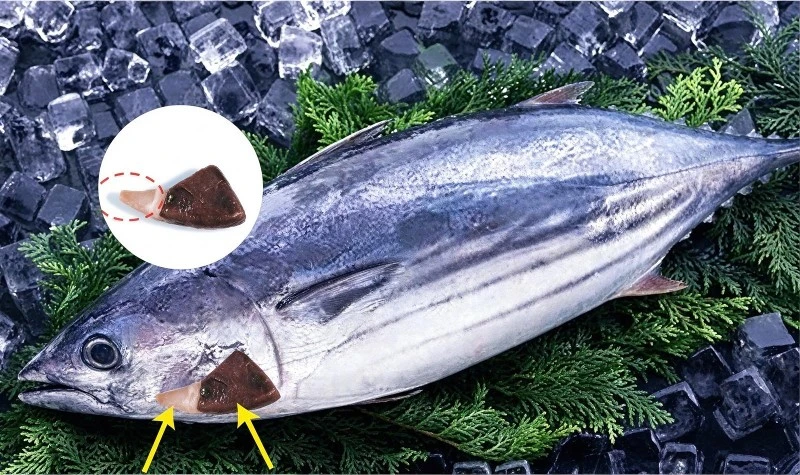
Several key formulation and processing variables act as trigger points for instability. First, skipjack elastin peptide operates within a relatively narrow pH tolerance window. Exposure to strong acidic or highly alkaline conditions disrupts the charge distribution on peptide surfaces and accelerates hydrophobic assembly. Second, sustained thermal stress during high-temperature emulsification, pasteurization or autoclaving can break peptide bonds and alter the balance between hydrophilic and hydrophobic fractions, increasing the tendency toward aggregation. Third, residual lipid and volatile amine precursors carried over from the arterial bulb extraction process are prone to oxidative degradation over shelf life, generating progressive off-notes. Compatibility conflicts also arise when the peptide is combined with certain cationic polymers, cationic surfactants, and high-load quaternary compounds; electrostatic interaction can neutralize peptide surface charge and induce rapid precipitation.
Validated Formulation & Processing Mitigation Strategies
Systematic formulation controls can substantially reduce these risks while safeguarding biological activity. A properly selected buffer system should be implemented to lock the working pH within the validated stable range before introducing the elastin peptide. Feeding protocol is critical: the material should be incorporated at reduced temperature, after high-energy homogenization and high-temperature processing stages are completed. Any deodorization treatment must follow a mild, selective process. Aggressive adsorption or oxidative deodorization removes low-molecular hydrophobic active fractions together with odor-causing impurities, directly lowering the content of desmosine and isodesmosine. Bulk raw material inventory should be stored under low-temperature, low-oxygen conditions with moisture barrier packaging, and finished products require stability testing covering freeze-thaw cycles, accelerated thermal storage and long-term real-time ageing assessment.
Batch Consistency & Quality Control Framework
Batch-to-batch reproducibility represents an additional persistent challenge for this marine-derived active. The starting tissue is skipjack arterial bulb, a by-product of fish processing. Variations in harvest season, post-mortem cooling speed, tissue cleaning protocols and controlled enzymatic hydrolysis degree will reshape the final peptide profile. Reliable quality control cannot rely solely on total nitrogen or protein content. The testing panel must include quantitative detection of desmosine and isodesmosine, molecular weight distribution, solubility profile and baseline odor evaluation to anchor consistent functional performance across shipments.
Conclusion
Successfully deploying skipjack elastin peptide requires formulation design that respects its unique molecular properties rather than treating it as a generic hydrolyzed peptide. Careful control of pH, thermal history, compatible adjuvants and storage conditions allows formulators to harness its capacity to modulate elastase activity and support dermal elastic matrix maintenance, without sacrificing the physical stability and sensory quality of the finished product.
Learn more about our Skipjack Elastin Peptide, engineered for reliable performance in skincare systems.
References
1. Sakai T, Sodemoto N, Taniguchi S, et al. Suitability of high‐molecular‐weight tissue‐derived elastin polypeptides and their particles as cosmetic biomaterials. Journal of Peptide Science, 2023, 29(2): e3472.
2. Usuki T, Suzuki R, Hayashi T, et al. LC-MS/MS analysis of desmosine and isodesmosine in skipjack tuna (Katsuwonus pelamis) elastin. Journal of Agricultural and Food Chemistry, 2016, 64(34): 6578–6584.
3. Vrhovski B, Weiss A S. Biochemistry of tropoelastin. European Journal of Biochemistry, 1998, 258(1): 1–18.