What Is Cosmetic-Grade Calcium Pantothenate?
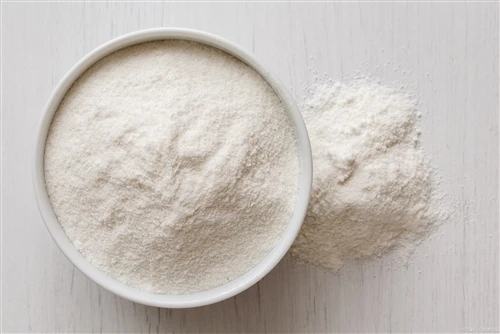
Cosmetic-grade calcium pantothenate, with the INCI name Calcium Pantothenate, is the calcium salt of D-pantothenic acid. It occurs as a white, free-flowing crystalline powder, and it serves as a stable carrier form of pantothenic acid (vitamin B5).
Unlike free pantothenic acid, which is highly hygroscopic and prone to hydrolytic degradation under ambient conditions, calcium pantothenate forms a tightly packed crystalline lattice that drastically improves thermal stability and moisture resistance. This fundamental physical and chemical property is the primary driver behind its rising adoption among large-scale cosmetic manufacturers.
While liquid D-panthenol remains widely used, its inherent limitations including higher freight cost per active content, risk of microbial contamination during long-term storage, and the requirement for cold-chain logistics in some cases create persistent pain points for procurement and quality departments. Calcium pantothenate addresses these supply-side challenges without sacrificing the biological function of pantothenic acid.
Once dissolved in aqueous formulation systems, it dissociates gradually to release bioavailable pantothenate ions, which enter the cutaneous coenzyme A biosynthetic pathway and support skin barrier homeostasis.
Source, Mechanism & Application Fields of Calcium Pantothenate
Calcium pantothenate is the calcium salt of naturally occurring D‑pantothenic acid, also known as vitamin B5. Industrially, it is mainly manufactured through chemical synthesis, while pantothenic acid itself can be found in natural sources such as yeast, royal jelly, legumes and animal organs.
After dissolving in aqueous cosmetic systems, calcium pantothenate dissociates to release D‑pantothenate. It participates in the synthesis of coenzyme A within skin cells, which is essential for lipid metabolism and the reconstruction of intercellular lipids. This metabolic pathway underpins its core cosmetic effects: repairing impaired skin barrier, reducing transepidermal water loss, soothing mild irritation and improving skin dryness. For hair care applications, it helps restore the integrity of hair cuticles, softens dry strands and reduces split ends.
It is widely adopted across multiple personal care categories, including sensitive‑skin skincare, post‑procedure soothing products, moisturizing toners, serums, masks, after‑sun care, shampoos, conditioners and leave‑on hair treatments. It is suitable for water‑based, hydro‑alcoholic and mild emulsion systems, and it is commonly selected for formulas that demand long‑term shelf stability.
Critical Quality Attributes You Must Verify on COA
When evaluating suppliers and incoming batches, QC teams must focus on a defined set of critical quality attributes beyond basic purity listed on the COA. The first benchmark is assay content, which is typically specified as 98.0%–102.0% on the anhydrous basis for cosmetic-grade material.
Moisture content is another decisive metric; excessive residual moisture accelerates caking and shortens shelf life, so qualified material should maintain low loss on drying. Heavy metal specifications including lead, arsenic, cadmium and mercury must comply with cosmetic safety limits enforced by target markets.
Microbial limits are equally important: total aerobic microbial count, yeast and mould count, and the absence of specified pathogens such as Pseudomonas aeruginosa, Staphylococcus aureus and E. coli are non-negotiable for cosmetic raw materials.
Additional parameters to review include appearance, solubility, pH of aqueous solution, residue on ignition and particle size distribution. Many substandard lots pass the purity test but fail to control residual calcium ion or related impurities, which may trigger pH drift, precipitation or incompatibility with anionic thickeners and actives in finished formulas.
It is worth noting that COA documents only reflect test results for sampled batches, and buyers should verify whether the supplier implements consistent in-process control, rather than relying solely on a single certificate.
Supply Chain & Logistics Benefits Over Liquid Panthenol
The supply chain advantages of calcium pantothenate become obvious when comparing logistics and inventory management with liquid panthenol. As a dry crystalline powder, it has a much higher active ingredient density, which reduces packaging volume and lowers unit freight expenditure.
It does not require insulated transport or strict cold storage during transit, and the recommended warehouse condition is simply a cool, dry, well-ventilated area sealed away from humidity. This greatly cuts the risk of product deterioration during cross-border shipment, especially for long ocean freight cycles.
For factories with large and stable B5 consumption, bulk stocking of calcium pantothenate reduces the frequency of reordering and minimizes the chance of supply shortage caused by liquid raw material leakage, package rupture or microbial spoilage.
Even so, proper inventory management is still required: repeated opening of packaging in humid workshops will cause gradual moisture absorption, so manufacturers should implement first-in-first-out stock rotation and use moisture-proof packaging after opening.
 Storage & Shelf-Life Management for Bulk Warehousing
Proper bulk storage is critical to preserving the quality of cosmetic-grade calcium pantothenate throughout its shelf life. The raw material should be sealed in moisture-proof packaging and stored in a cool, dry, well-ventilated warehouse, away from direct sunlight, heat sources and corrosive vapours.
Calcium pantothenate is relatively stable under recommended conditions, yet repeated exposure to humid air will trigger gradual moisture absorption, caking and a slow rise in water content. Once caking occurs, it cannot easily return to its original free-flowing state, which affects weighing accuracy and dissolution performance during production.
The standard shelf life for unopened stock is typically 24 months. Warehouse teams should adopt FIFO (first-in, first-out) stock rotation. After opening, manufacturers are advised to consume the material quickly and re-seal the package tightly with moisture barrier materials. Avoid storing it together with strongly acidic or oxidizing raw materials in the same storage area.
Formulation Application & Compatibility Guidance
Calcium pantothenate is suitable for a wide spectrum of cosmetic and personal care formulations, including facial toners, serums, moisturizing creams, sheet masks, sun care after-sun products, shampoos and conditioners. The typical recommended dosage ranges from 0.2% to 3.0%.
It demonstrates good compatibility with many common cosmetic ingredients such as sodium hyaluronate, allantoin, dipotassium glycyrrhizate and centella asiatica extract.
Formulators should avoid prolonged exposure to strongly acidic or strongly oxidizing environments, as these conditions will suppress its stability and bioavailability. The feeding sequence should follow standard powder dissolving operation: disperse into the water phase under stirring before adding acidic actives or preservatives, to avoid local over-concentration and undissolved agglomeration.
Transition Tips for Manufacturers Switching B5 Raw Materials
For cosmetic manufacturers planning to switch B5 sources, the transition requires small-scale compatibility and stability testing first. Even if the supplier's specifications meet the standard, the interaction with your existing formula matrix needs to be validated through accelerated stability tests and long-term room-temperature observation.
A qualified supplier will support customers with formulation technical service, provide stable batch data and offer sample testing before bulk order. If you are sourcing high-quality cosmetic-grade calcium pantothenate for your production line, explore our Calcium Pantothenate. Full technical datasheets, COA, SDS and regulatory documents are available, and sample requests are welcome.